This post is also available in:
Welcome to my comprehensive analysis of the current generation of televisions! I have extensively tested and compared which models can truly impress.
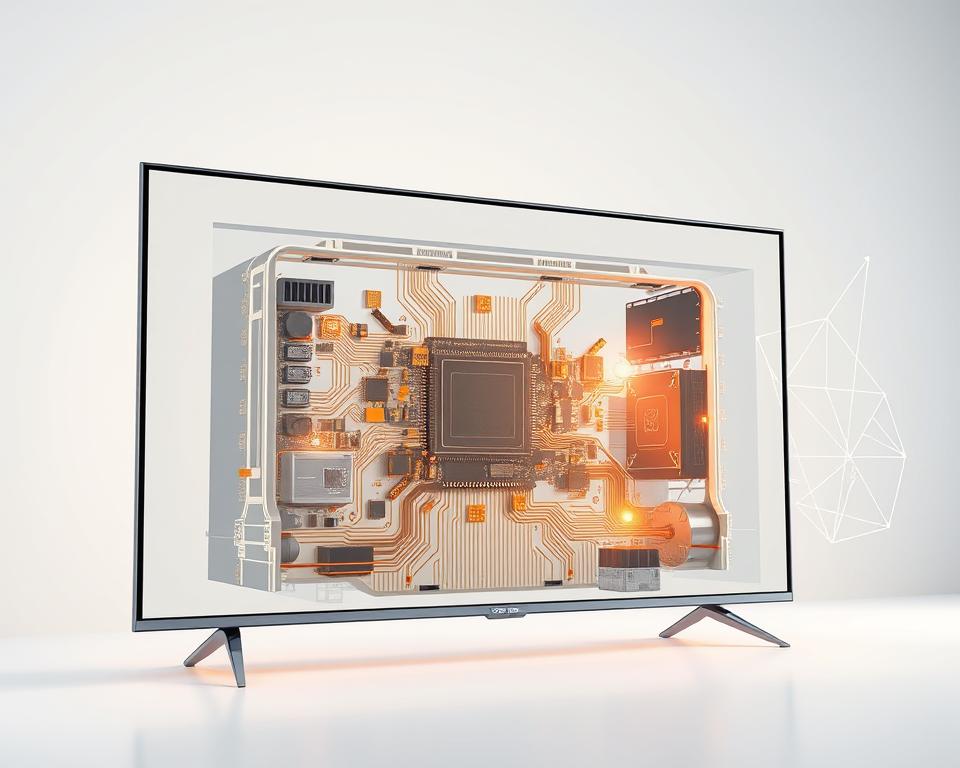
Artificial intelligence is fundamentally changing consumer electronics today. This technology offers real improvements in image quality and ease of use.
My selection focuses on devices that not only shine through technical specifications. They must offer practical added value in everyday life.
I have taken a close look at brands such as Samsung, Sony, LG, and other leading manufacturers. Particular attention was paid to the integration of smart functions.
Whether you are a home theater enthusiast or a casual user, you are guaranteed to find the right model in my overview. The selection takes into account different budgets and requirements.
Key Takeaways
- Artificial intelligence noticeably improves image quality and operation
- Comprehensive tests of top brands such as Samsung, Sony, and LG
- Selection for different budgets and usage profiles
- Practical added value in daily use is the priority
- Special features for film fans and gaming enthusiasts
- Evaluation based on real tests and comparisons
Introduction to the World of AI-TV Devices
Modern televisions with AI technology now offer significantly more than just higher resolutions. They fundamentally change how we experience entertainment.
As an expert, I have been observing this development for years. The integration of intelligent systems represents a real paradigm shift.
Background and Market Overview
The current market is dominated by several leading manufacturers. Samsung, Sony, and LG are setting new standards with special processors.
The most popular size in 2025 will be 65 inches. This dimension offers a real cinema experience with good living room suitability.
| Manufacturer | AI Processor | Special Features | Price Segment |
|---|---|---|---|
| Samsung | Neural Quantum Processor | 4K Upscaling, Object Recognition | Mid to Premium |
| Sony | Cognitive Processor XR | Real-time Analysis, Contrast Optimization | Premium |
| LG | Alpha 9 AI Processor | Voice Control, Genre Adaptation | Mid to High-End |
| Panasonic | HCX Pro AI | HDR Optimization, Color Calibration | Upper Middle Class |
Relevance of AI in Modern Televisions
The technology is changing how we watch movies and series. Intelligent algorithms analyze content in real time and adapt it optimally.
Particularly impressive is the ability to scale low resolutions to 4K level. Natural details are preserved.
The relevance is not only in better image quality. Voice control and personalized recommendations make it more convenient to use.
Every genre benefits from intelligent adaptation. Whether action movies, sports broadcasts, or games – the presentation is always optimized.
What Does AI Mean for Modern Televisions?
The integration of artificial intelligence is currently revolutionizing television technology. It goes far beyond simple image enhancement.
Modern systems use complex neural networks. These continuously learn and optimize the viewing experience.
Functionality and Possible Applications
Special processors analyze millions of image data. They recognize in real time whether it is faces, landscapes, or texts.
The technology automatically adjusts all parameters. This applies to resolution, noise reduction, and sound optimization.
| AI Function | Scope | Advantage for Users |
|---|---|---|
| Image Optimization | Contrast, Colors, Sharpness | Automatic Adaptation to Content |
| Upscaling | Low to 4K Resolution | Better Display of Old Content |
| Gaming Mode | Latency, Motion Sharpness | Optimized Gaming Experience |
| Streaming Optimization | Compressed Data | Artifact Minimization |
Advantages for the End User
For me as a user, this means enormous relief. Constant manual adjustment is completely eliminated.
Every content receives the optimal presentation. Streaming services in particular benefit from this.
The future-proofing convinces me especially. Software updates continuously improve performance.
For gaming, this means automatic mode switching. Latency times and motion sharpness are intelligently optimized.
Important Technical Features and Specifications
In my tests, I focus on the technical details that make for a real premium experience. The right combination of hardware and software determines the daily ease of use.
Image Resolution, Brightness, and Contrast
The standard resolution of 3,840 x 2,160 pixels (4K/UHD) offers an excellent basis today. But intelligent upscaling makes the crucial difference with older content.
For the brightness, I measure in nits – top models reach over 1,500 nits. This guarantees brilliant HDR display even in daylight.
When it comes to contrast, I rely on OLED panels with perfect black or Mini-LED technology. Both options deliver impressive results for various applications.
HDMI 2.1 and Gaming Features
For me, HDMI 2.1 is indispensable. The standard enables 4K @ 120 Hz and full 48 Gbps bandwidth for current consoles.
Models like the Samsung S95F offer four full HDMI 2.1 ports. So you can operate multiple devices at the same time.
The refresh rate of 120 Hz or even 165 Hz combined with VRR ensures smooth gaming. ALLM automatically activates the gaming mode on your consoles.
For passionate gamers, low latency times are crucial. Modern televisions reduce input lag to a professional level.
Display Innovations: OLED, QD-OLED, and Mini-LED
In my extensive tests of the various display technologies, I was able to identify fascinating differences. Each technology brings its own strengths and is suitable for different applications.
Comparison of Different Panel Technologies
OLED displays impress me with their perfect black, as each pixel can be switched off individually. This leads to infinite contrast ratios and impressive image depth.
The latest QD-OLED technology combines OLED advantages with Quantum Dots for more vibrant colors. Models like the Samsung S95F achieve higher peak brightness.
RGB-Tandem-OLED panels in the LG OLED G5 use double light layers. They offer significantly better brightness than classic OLEDs.
Mini-LED with thousands of dimming zones reaches up to 4,500 nits. The TCL C8K with 1,680 zones is ideal for bright rooms.
| Technology | Strengths | Peak Brightness | Ideal for |
|---|---|---|---|
| OLED | Perfect Black, High Contrasts | 800-1,000 Nits | Darkened Rooms |
| QD-OLED | Vibrant Colors, Better Brightness | 1,500-2,000 Nits | All-round Use |
| RGB-Tandem-OLED | Highest OLED Brightness | 2,000-2,500 Nits | Premium Cinema Experience |
| Mini-LED | Extreme Brightness, No Burn-in | 3,000-4,500 Nits | Bright Living Rooms |
In direct comparison, the differences are particularly evident in the lighting environment. While OLEDs shine in dark rooms, Mini-LED models score in daylight.
The second generation QD-OLED offers more balanced performance for various conditions. The contrasts remain excellent.
Optimal Image Quality: HDR, Dolby Vision, and Dynamic Range
HDR technology has shown the greatest effect on image quality in my tests. High Dynamic Range significantly expands the representable contrast range.
For me, Dolby Vision is the most advanced format. It uses dynamic metadata for each individual scene.
Experiences from Test Reports and Technical Data
The differences between the formats are clearly visible. Dolby Vision offers up to 12-bit color depth and mastering for 10,000 nits.
HDR10 works with static metadata and 10-bit color depth. Samsung relies on HDR10+ as an alternative.
The dynamic range of modern devices impresses me. OLEDs reach over 1,500 nits, Mini-LED models up to 4,500 nits.
| Model | HDR Formats | Peak Brightness | Special Feature |
|---|---|---|---|
| Sony Bravia 8 II | HDR10, HLG, Dolby Vision | 1,500 Nits | Full Dolby Vision Support |
| Samsung S95F | HDR10, HLG, HDR10+ | 2,000 Nits | HDR10+ with Dynamic Metadata |
| LG OLED G5 | HDR10, HLG, Dolby Vision IQ | 1,800 Nits | Adaptation to Room Brightness |
| Panasonic Z95B | Dolby Vision, HDR10, HLG | 1,700 Nits | High-Quality HDR Processing |
For HDMI 2.1 users, Dolby Vision Gaming is important. LG models in particular support this function.
The image quality depends on the AI processor. Good tone mapping optimally adapts HDR content to the display.
The Best TV Devices with AI in Comparison
My comprehensive investigation of the leading Smart TVs with artificial intelligence shows clear winners. I have tested numerous models from Samsung, Sony, LG, and other manufacturers.
The comparison is based on practical tests under real conditions. The focus was on AI functions and daily ease of use.
Analysis of Leading Models in Overview
In my best list for 2025, two televisions share the top spot. The Samsung S95F and Sony Bravia 8 II impress with QD-OLED technology.
Both devices offer excellent image quality and advanced processors. The LG OLED G5 represents a strong alternative.
For home theater fans, I recommend the Panasonic Z95B. This television combines RGB-Tandem-OLED with optimized sound.
Highlighting the most Important AI Features
The intelligent functions go far beyond pure image optimization. Modern systems automatically recognize content and genre.
They dynamically adjust contrast, colors, and sharpness. Samsung’s Neural Quantum Processor and Sony’s Cognitive Processor XR set different priorities.
| Model | Display Technology | AI Processor | Special Features |
|---|---|---|---|
| Samsung S95F | QD-OLED | Neural Quantum | 4K Upscaling, Object Recognition |
| Sony Bravia 8 II | QD-OLED | Cognitive XR | Real-time Analysis, Contrast Optimization |
| LG OLED G5 | RGB-Tandem-OLED | Alpha 11 Gen 2 | Genre Adaptation, Voice Control |
| Panasonic Z95B | RGB-Tandem-OLED | HCX Pro AI | Film Optimization, Sound Adaptation |
The image quality of modern televisions benefits greatly from software updates. Algorithms are continuously improved.
My comparison shows: AI features make the difference in everyday life. They simplify operation and optimize every viewing experience.
Comparison of Leading Models: Samsung S95f and Sony Bravia 8 II
The comparison of Samsung S95F and Sony Bravia 8 II reveals fascinating technical differences. Both devices share the top spot in my ranking, but their strengths lie in different areas.
Design, Connections, and Ease of Use
When it comes to design, the Samsung impresses me with its external One-Connect-Box. It bundles all connections and ensures a clean appearance. The Sony, on the other hand, scores with Acoustic Surface Audio+.
The differences in the connections are significant. The Samsung offers four full HDMI 2.1 ports, ideal for multiple consoles. Sony settles for two HDMI 2.1 ports.
When it comes to ease of use, I like Samsung’s Tizen OS for its speed. Sony’s Google TV offers more app selection. Unfortunately, both systems are ad-supported.
Gaming Performance and Image Quality in Focus
For gaming, the Samsung is unbeatable. With a 165 Hz refresh rate and VRR on all four HDMI 2.1 ports, it is completely convincing. The input lag is at a professional level.
The image quality of both QD-OLED models is excellent. The Sony benefits from Dolby Vision support, which is advantageous for movies. Samsung relies on HDR10+.
The matte anti-reflection of the Samsung makes it perfect for bright rooms. Sony’s image quality for film content is slightly more natural thanks to Dolby Vision. Both use modern HDMI 2.1 standards.
Alternative Top Models: LG OLED G5 as an Option
While Samsung and Sony are often in the spotlight, the LG OLED G5 deserves special attention for its unique strengths. This model offers a compelling alternative with innovative technology.
The RGB-Tandem-Panel is one of the most exciting developments for me. By using two light layers on top of each other, it achieves significantly higher brightness than classic OLED displays.
RGB-Tandem-Panel and Extended Smart Features
The Alpha 11 Gen 2 AI processor works excellently. With AI-Super-Upscaling, it impressively improves low-resolution content to 4K level.
For gaming fans, the device offers four HDMI 2.1 ports. The refresh rate of 165 Hz ensures a smooth gaming experience.
I particularly appreciate Dolby Vision IQ. This function automatically adjusts the HDR display to the room brightness.
LG has significantly improved the webOS 25 Smart systems. Faster navigation and better app selection make everyday life more comfortable.
In the last comparison test, the G5 took a respectable third place. Minimal differences in color calibration were responsible for this.
The Gallery Design with ultra-flat construction is a real eye-catcher. Technology and aesthetics harmonize perfectly here.
Televisions for Bright Rooms and Different Living Situations
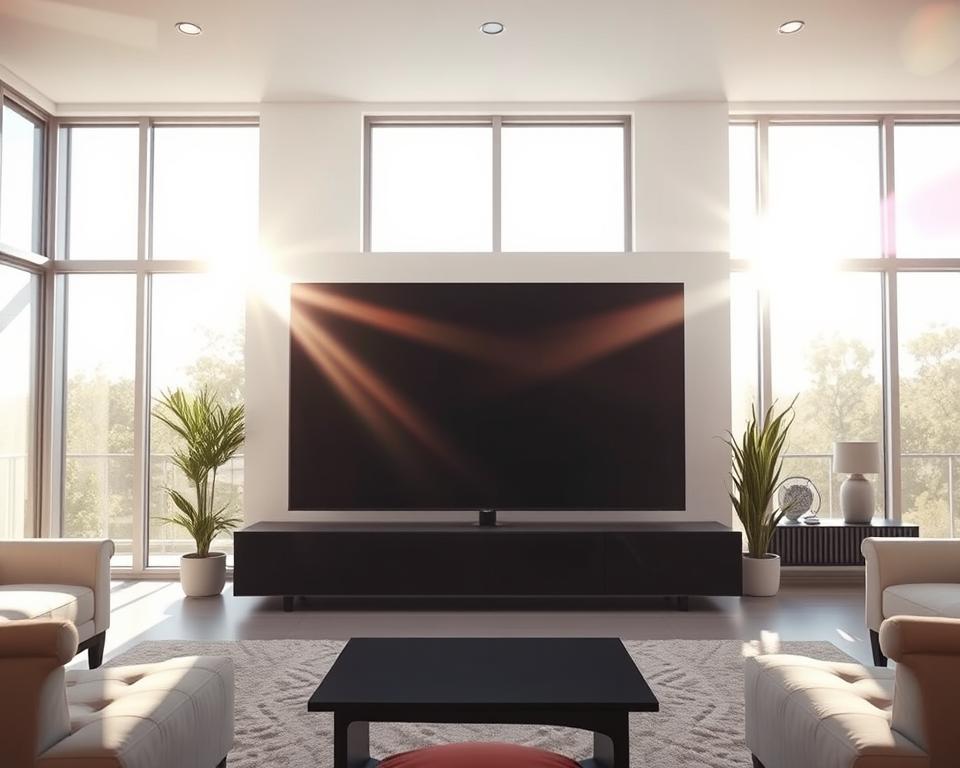
The lighting conditions in your living room significantly influence which television is optimal for you. In my tests, I simulated different rooms with different lighting situations.
Models with High Peak Brightness and Anti-Reflective Coating
For particularly bright rooms with large windows, I recommend the TCL C8K. This Mini-LED TV achieves an impressive peak brightness of 4,500 nits.
With 1,680 dimming zones, it offers excellent contrast even in direct sunlight. The high brightness makes content perfectly visible even in daylight.
The Samsung S95F impresses with its matte anti-reflective coating. This surface significantly reduces distracting reflections from lamps and windows.
As an alternative for moderately bright rooms, the Sony Bravia 9 is suitable. It offers over 3,000 nits of peak brightness and excellent color reproduction.
| Model | Technology | Peak Brightness | Special Feature |
|---|---|---|---|
| TCL C8K/Q8C | Mini-LED | 4,500 Nits | 1,680 Dimming Zones |
| Samsung S95F | QD-OLED | 2,000 Nits | Matte Anti-Reflective Coating |
| Sony Bravia 9 | Mini-LED | 3,000+ Nits | Wide Viewing Angle |
The size of the room also plays an important role. In smaller rooms with light walls, OLED models with good anti-glare properties may also suffice.
However, for large, light-filled living rooms, Mini-LED devices with high nit values are the better choice. The combination of peak brightness and effective anti-glare determines the viewing experience.
Gaming and HDMI 2.1: Performance and Future
As a passionate gamer, I have identified HDMI 2.1 as a crucial factor for modern gaming. This standard revolutionizes the gaming experience with impressive data rates.
The 48 Gbps bandwidth enables smooth 4K gaming at 120 Hz for the first time. This is indispensable for current consoles like PlayStation 5.
Low Input Lag and High Refresh Rates
In my tests, the input lag on the Samsung S95F was under 10 ms. This is crucial for competitive games.
VRR completely eliminates tearing. The synchronization between display and console makes games buttery smooth.
Models with four HDMI 2.1 ports are ideal. This way, you can operate multiple consoles simultaneously.
ALLM automatically activates gaming mode. Manual switching is a thing of the past.
The future lies in further optimized HDMI 2.1 features. Higher resolutions and refresh rates will follow.
Market Overview: Price, Models, and Series
The current TV market offers an enormous price range for every budget. Here, I’ll give you a comprehensive overview, from affordable entry-level models to premium flagships with sophisticated AI features.
For the most popular size of 65 inches, the price for solid mid-range devices starts at around 600 Euros. True top models with OLED panels, however, range between 1,800 and 3,000 Euros.
Price Comparison between Entry-Level and Premium Models
My detailed comparison of the top models shows the significant differences. Within a series, the price can vary greatly depending on the screen diagonal.
For 55-inch models, the entry price for a premium device is 1,480 Euros. The most expensive model in this size costs over 2,100 Euros.
For bargain hunters, there are good devices available for under 500 Euros. However, these usually do not have the advanced AI features of high-end models.
| Model | 55 Inches | 65 Inches | 77 Inches |
|---|---|---|---|
| Samsung S95F | from €1,480 | from €1,879 | from €2,899 |
| Sony Bravia 8 II | from €1,899 | from €2,499 | – |
| LG G5 | from €1,599 | from €1,969 | from €3,253 |
| Panasonic Z95B | from €2,149 | from €2,439 | from €4,999 |
The best value for money is often found in the upper mid-range, between 800 and 1,500 Euros. When buying, you shouldn’t just look at the purchase price.
Factors such as power consumption, software support, and durability are also important for the total cost.
Smart TV Systems and AI-Optimized Operating Systems
Today, the operating system of a modern TV is crucial for the daily user experience. I have extensively tested and compared the most important systems.
Each system offers different strengths in AI integration. Usability varies significantly between manufacturers.
Tizen OS, Google TV, and webOS in Direct Comparison
Samsung’s Tizen OS impresses me with its high speed. The integrated Gaming Hub intelligently bundles consoles and cloud services.
Google TV on Sony and Philips offers the best app selection. AI-powered recommendations adapt to viewing habits.
LG’s webOS 25 has evolved into an intuitive system. The Magic Remote with AI features makes navigation particularly comfortable.
Panasonic now relies on Fire TV with a large app library. Alexa integration expands voice control options.
All important streaming apps are available pre-installed. Netflix, Disney+, and Amazon Prime Video run smoothly.
| Operating System | AI Features | Gaming Support | App Availability |
|---|---|---|---|
| Tizen OS (Samsung) | Gaming Hub Integration | Cloud Gaming Services | Very Good |
| Google TV (Sony/Philips) | Personalized Recommendations | Standard Gaming Mode | Excellent |
| webOS 25 (LG) | Automatic Optimization | Full HDMI 2.1 | Very Good |
| Fire TV (Panasonic) | Alexa Integration | Gaming Mode Available | Excellent |
Unfortunately, almost all systems contain advertisements. This somewhat detracts from the user experience.
For long-term use, I recommend systems with a long update guarantee. Google TV and webOS receive regular improvements.
Samsung’s Gaming Hub is particularly practical for gamers. It combines Xbox Cloud Gaming and GeForce Now.
Choosing the right system influences daily content. Modern TVs offer excellent possibilities here.
My comparison shows: Each system has its advantages. The decision depends on personal priorities.
Customer Reviews and Test Results at a Glance
Customer reviews and expert tests complement my own experiences with the current models. They offer practical insights into everyday use.
Stiftung Warentest has tested 315 devices. Of these, 288 are currently available. The price ranges from under 250 Euros to 3,500 Euros.
Consumer Opinions and Test Results from Trade Publications
The evaluation comprises four main criteria: Picture Quality, Sound, Handling, and Environmental Properties. Experts test via various input methods.
Buyers are willing to invest more for good performance. The sound is often rated more critically than in lab tests.
The placement in my list aligns with trade magazines. Samsung and Sony occupy top spots.
There are differences between lab and practice. Customer feedback better reflects long-term experiences.
In terms of price-performance ratio, models between 800 and 1,500 Euros perform best. They offer solid quality at a fair price.
Buying Guide: Tips for Choosing the Ideal TV Device
My personal buying guide summarizes the most important decision criteria for your perfect TV. Based on years of experience, I will help you find the right model.
Important Criteria and Decision Aids
The size is your first step. 65 inches remains the most popular choice for living rooms in 2025. This diagonal offers a true cinema experience with good everyday usability.
Consider the viewing distance. With 4K resolution, you can sit closer than before. Ideally, it’s about 1.5 times the screen diagonal.
The price should match your budget. For solid 65-inch models with AI features, plan for 800-1,000 Euros. Premium devices cost 1,800-3,000 Euros.
The features make the difference. At least two HDMI 2.1 ports are recommended for gaming consoles. Four ports offer more flexibility.
| Criterion | Recommendation | Special Features |
|---|---|---|
| Screen Size | 65 Inches for Living Room | Optimal Viewing Distance: 2.5 Meters |
| Price Segment | 800-3,000 Euros | AI Features from 800 Euros |
| Ports | 4x HDMI 2.1 Ideal | For Gaming and Consoles |
| Internet Connection | Prefer LAN Cable | Stable Streaming |
The combination of panel technology and brightness determines the viewing experience. OLED for dark rooms, Mini-LED for bright environments.
Don’t forget hidden costs like power consumption and accessories. A stable connection via LAN cable ensures the best streaming quality.
Future Trends: Innovations in AI and TV Technology
What comes after the current top models? My forecast shows exciting developments in TV technology. The next few years will bring exciting changes for all movie and series fans.
Expectations for Future Developments
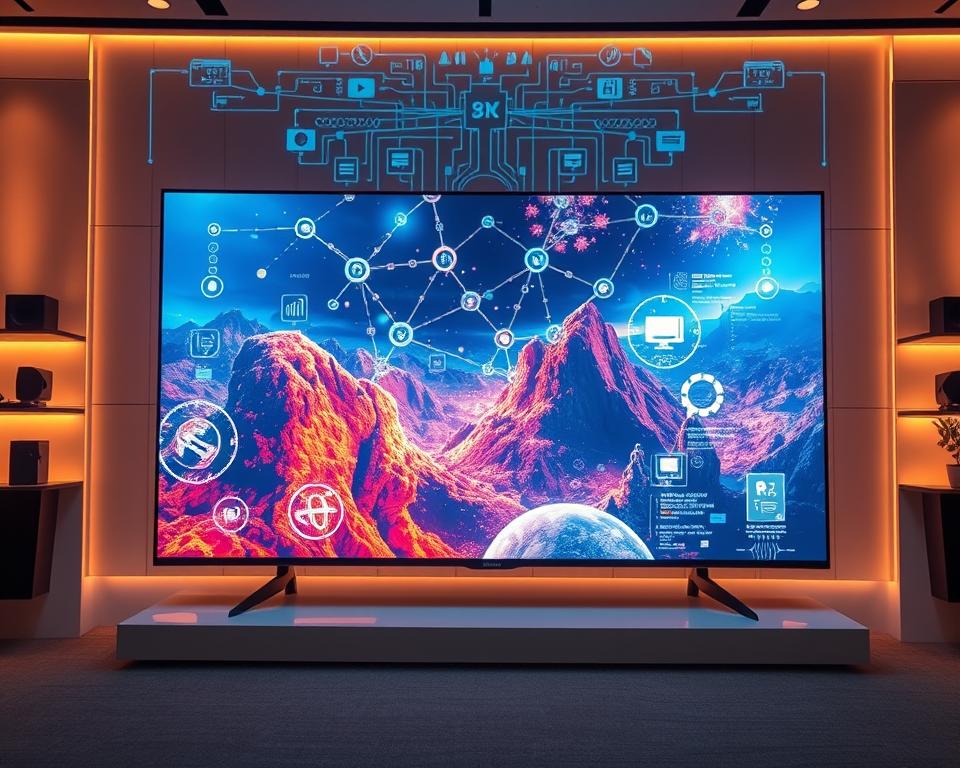
Intelligent processors will become even more powerful. In the future, they will analyze not only images but also audio tracks. This ensures optimal sound for any content.
The resolution goes beyond 4K. 8K models with AI upscaling will become more affordable. However, native 8K content will remain rare for now.
Peak brightness continues to increase. OLED panels could reach 3,000 nits. Mini-LEDs might achieve over 6,000 nits. HDR content will become even more impressive.
Micro-LED technology is revolutionizing the market. It combines perfect blacks with extreme brightness. However, the initial price will be high.
| Innovation | Expected Period | Impact on Price |
|---|---|---|
| AI Audio Optimization | 2026-2027 | Moderate Increase |
| 8K Breakthrough | 2027-2028 | Initially High, Then Decreasing |
| Micro-LED Introduction | 2028-2029 | Very High |
| Wireless HDMI | 2026-2027 | Slight Surcharges |
Personalized viewing experience will become standard. Intelligent systems automatically recognize the viewer. They adapt picture and sound individually.
In the case of wireless transmission, I see potential. Wireless HDMI with 4K @ 120 Hz could eliminate cable clutter. This allows for more flexible setups.
The price for premium technologies is continuously decreasing. Features of today’s flagships will reach the mid-range in a few years. This makes innovations accessible to more people.
Conclusion
My comprehensive test series of the current top models leads to a clear conclusion. The smart TVs of 2025 offer outstanding performance for every home.
Samsung S95F and Sony Bravia 8 II share the top spot. Both impress with excellent picture quality. The Samsung scores with four HDMI 2.1 ports for gaming fans.
The LG OLED G5 is a strong alternative. Its AI upscaling and Dolby Vision IQ make it particularly versatile. For bright rooms, I recommend the TCL C8K with high peak brightness.
The price for 65 inch premium devices ranges between 1,800 and 2,500 Euros. Solid mid-range models are available from 800 Euros.
My final choice recommendation: Pay attention to HDMI 2.1, high nits values, and Dolby Vision. This will ensure you are optimally equipped for the years to come.