


This post is also available in:
Current TV Technologies at a Glance
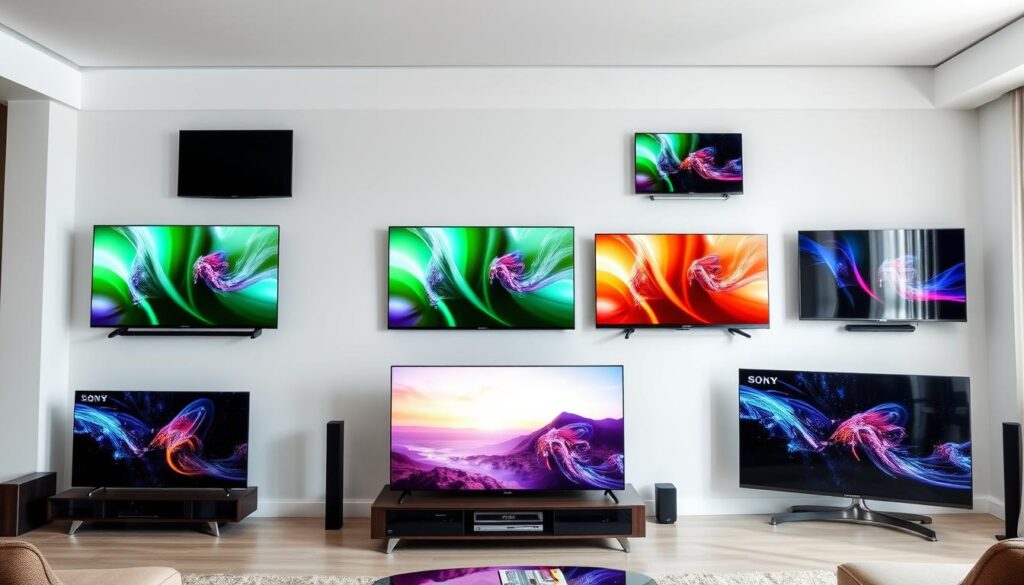
A TV’s picture quality is largely determined by the display technology used. Each technology has its own strengths and weaknesses, which carry different weight depending on usage and environment.
OLED Technology

OLED TVs (Organic Light Emitting Diode) currently offer the best picture on the market. Each pixel is self-illuminating and can be completely turned off, leading to perfect blacks and infinite contrast. Colors are vibrant and natural, and the viewing angle is excellent.
- Perfect Blacks and Infinite Contrast
- Vibrant, Natural Colors
- Extremely Fast Response Time (Ideal for Gaming)
- Wide Viewing Angle
- Very Thin Design
Disadvantages: Lower peak brightness than QLED/Mini-LED, theoretical burn-in risk with static images, higher price.
QLED Technology

QLED TVs (Quantum Dot LED) use a special quantum dot coating to convert the light from the LED backlight into purer and more intense colors. This technology offers excellent brightness and a large color volume.
- Very High Peak Brightness (Ideal for Bright Rooms)
- Impressive Color Volume
- No Burn-in Risk
- Longer Lifespan
- Good value for money
Disadvantages: No perfect blacks like OLED, limited viewing angle, thicker chassis.
Mini-LED Technology
Mini-LED is an evolution of conventional LED technology. By using thousands of tiny LEDs in the backlight, more precise local dimming is achieved, significantly improving contrast.
- Very High Peak Brightness
- Improved Contrast Compared to Conventional LEDs
- More Precise Local Dimming
- No Burn-in Risk
- Good Alternative to OLED
Disadvantages: Not quite as deep blacks as OLED, blooming effects possible, higher price than standard LED.
QD-OLED Technology

QD-OLED is a new hybrid technology that combines the advantages of OLED (perfect blacks) with those of QLED (higher brightness, larger color volume). These TVs use blue OLED pixels with quantum dots to produce the other colors.
- Perfect Blacks like OLED
- Higher Brightness than Conventional OLEDs
- Larger Color Volume
- Excellent Viewing Angle
Disadvantages: Very high price, limited model selection, theoretical burn-in risk.
Micro-LED Technology

Micro-LED is the newest and most advanced TV technology. Similar to OLED, the pixels are self-illuminating but consist of inorganic materials. This allows Micro-LED to combine the advantages of OLED with higher brightness and no burn-in risk.
- Perfect Blacks and Infinite Contrast
- Extremely High Brightness
- Longer Lifespan than OLED
- No Burn-in Risk
- Modular Design Possible
Disadvantages: Extremely high price, very limited availability, mainly in very large screen sizes.
LED/LCD Technology
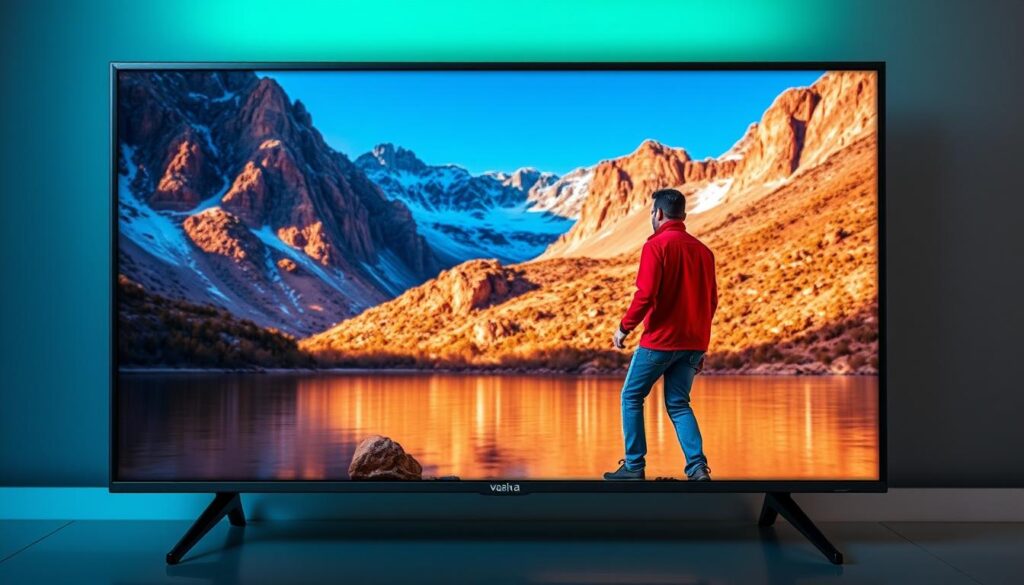
Classic LED/LCD technology is still widely used and offers good value for money. These TVs use an LED backlight and LCD panels for image generation.
- Lowest Entry Price
- Good Brightness
- Long Lifespan
- No Burn-in Risk
- Wide Range of Models
Disadvantages: Limited contrast, limited black levels, limited viewing angle.
Evaluation Criteria for TV Quality
Various factors play a role when evaluating TVs. Here are the most important criteria you should consider when choosing a new TV:
Resolution
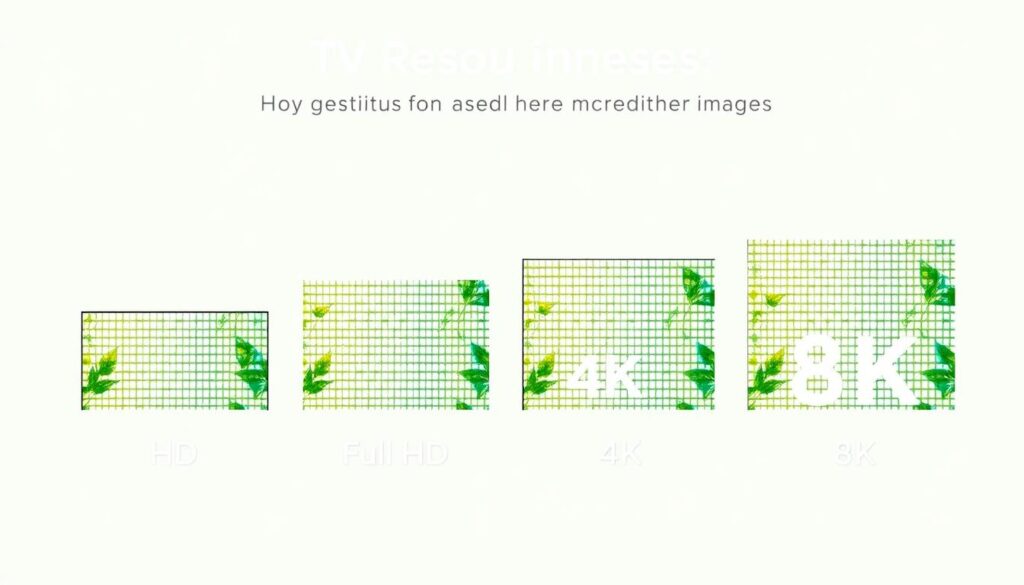
Resolution determines the number of pixels on the screen and thus the sharpness and detail of the image.
- Full HD (1920 x 1080): Sufficient for small screens and longer viewing distances
- 4K UHD (3840 x 2160): Current standard with four times as many pixels as Full HD
- 8K (7680 x 4320): Highest available resolution, but still limited native content
For most users, 4K is the optimal choice, offering excellent picture quality and with plenty of content now available in this resolution.
HDR (High Dynamic Range)
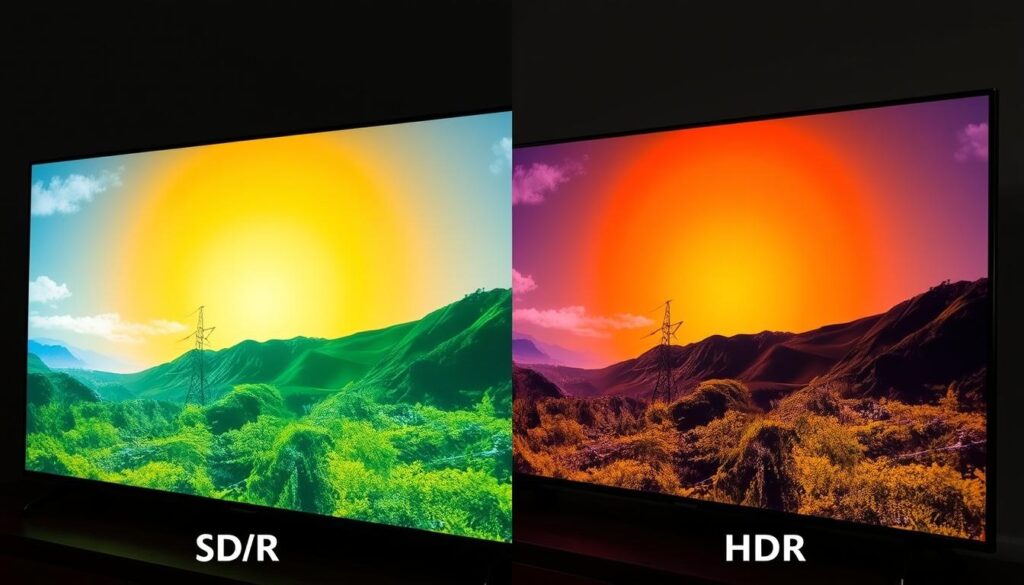
HDR expands the dynamic range of the image, leading to more details in dark and bright areas, as well as more vibrant colors.
- HDR10: Open standard, supported by all HDR-capable TVs
- Dolby Vision: Premium format with dynamic metadata for scene-by-scene optimization
- HDR10+: Samsung’s alternative to Dolby Vision with dynamic metadata
- HLG: HDR format developed for TV broadcasts
A good TV should support at least HDR10, and ideally also Dolby Vision or HDR10+.
Refresh Rate
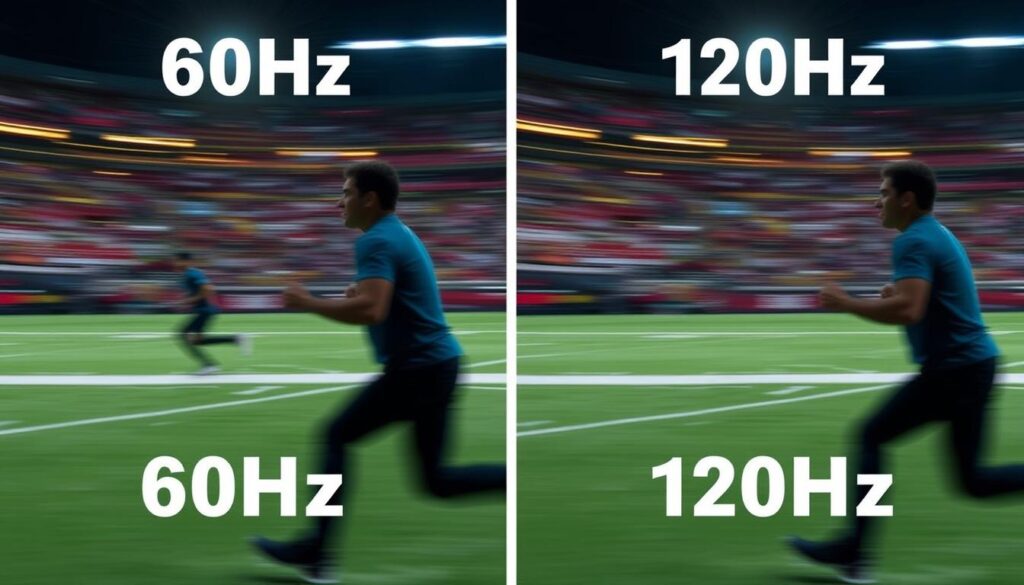
The refresh rate indicates how many frames per second the TV can display and affects motion clarity.
- 50/60 Hz: Basic standard, sufficient for normal TV content
- 100/120 Hz: Significantly improved motion display, ideal for sports and gaming
- Frame Interpolation: Technology for artificially increasing the frame rate
For sports fans and gamers, a native refresh rate of 100/120 Hz is recommended, as it displays smoother motion.
Smart TV Features
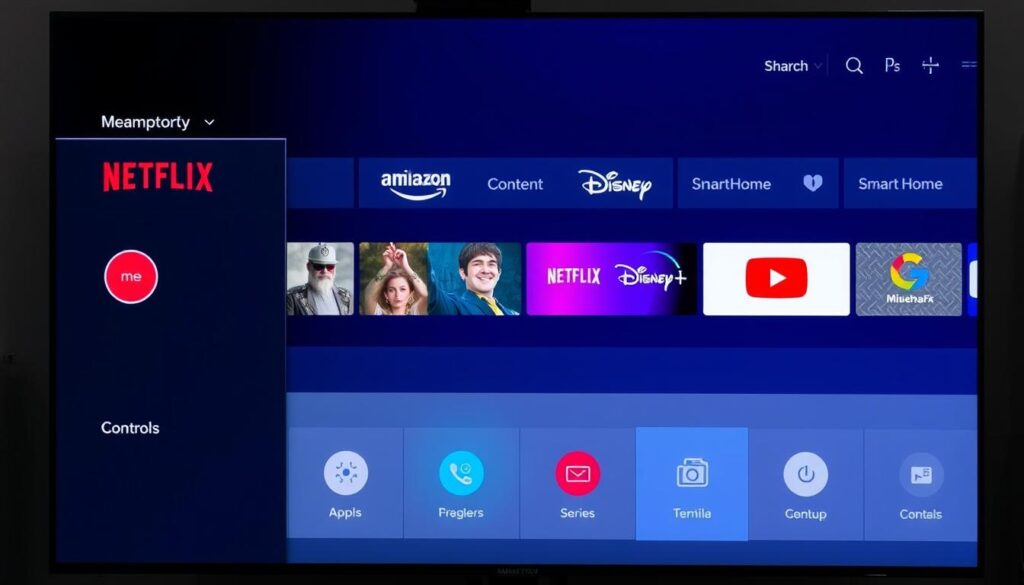
Smart TV features allow access to streaming services, apps, and online content directly through the TV.
- Operating System: Android TV, webOS (LG), Tizen (Samsung), etc.
- App Support: Netflix, Amazon Prime, Disney+, etc.
- Voice Control: Google Assistant, Alexa, etc.
- Smart Home Integration: Control of compatible devices
Look for a fluid, user-friendly operating system with good app support.
Gaming Features
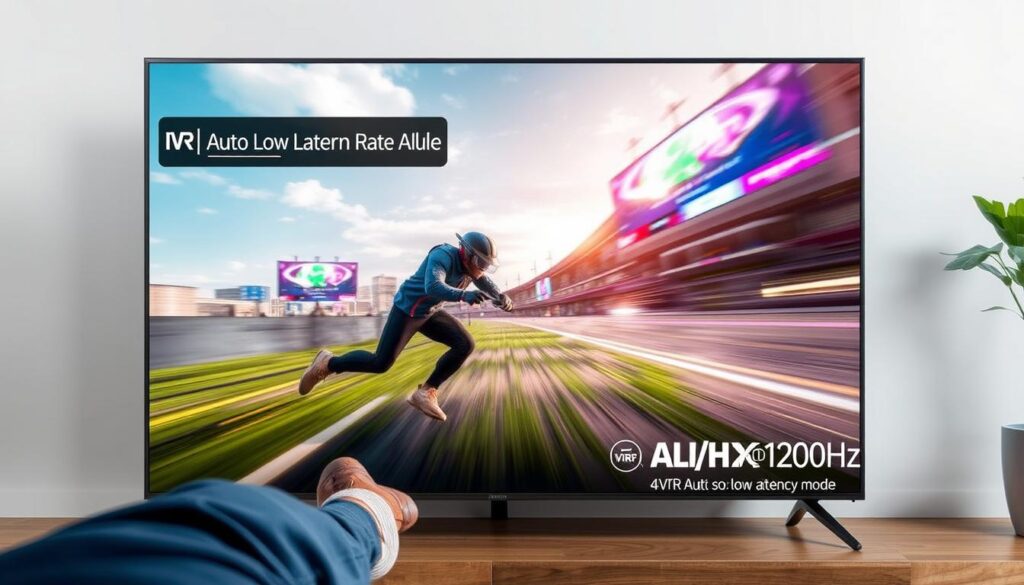
For gamers, special features are important to enhance the gaming experience and minimize delays.
- HDMI 2.1: Support for 4K@120Hz and 8K@60Hz
- VRR (Variable Refresh Rate): Prevents screen tearing
- ALLM (Auto Low Latency Mode): Automatic game mode
- Input Lag: Delay between input and screen display
Modern consoles like PS5 and Xbox Series X particularly benefit from HDMI 2.1 features.
Ports and Connectivity
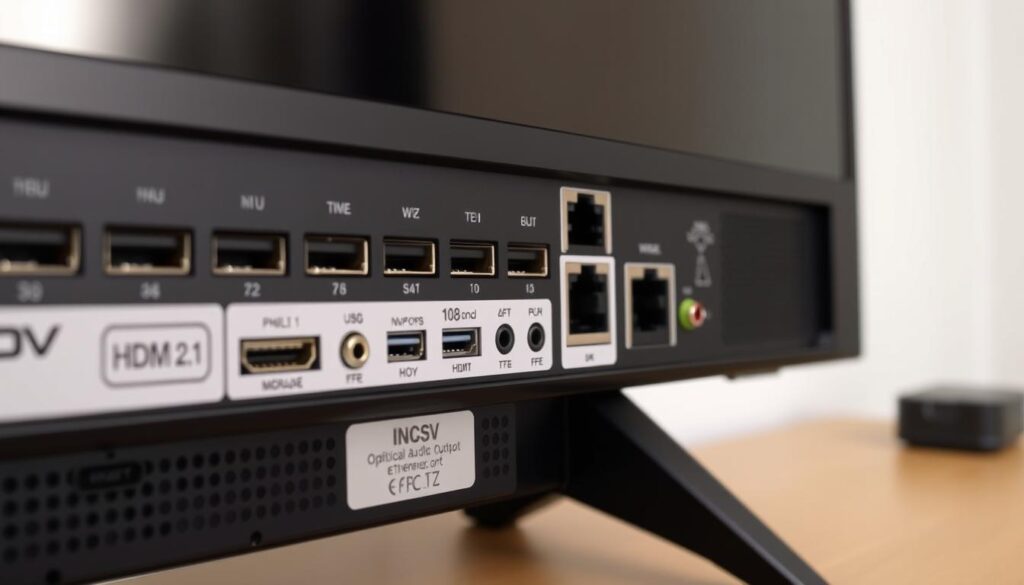
The ports determine which external devices you can connect to your TV.
- HDMI: Most important port for external devices
- USB: For media playback and recording
- Optical Output: For external audio systems
- Ethernet: Wired internet connection
- Bluetooth: For wireless headphones and controllers
Ensure sufficient HDMI ports (at least 3-4) and HDMI 2.1 if needed.
The Best TV Models of 2025
After extensive testing and analysis, we present the best TVs of 2025. Our selection considers picture quality, features, value for money, and special features for various user groups.
LG OLED G5 – The Best OLED TV
The LG OLED G5 sets new standards in OLED technology. With its improved OLED evo panel and powerful a11 Gen2 AI processor, it delivers impressive picture quality with perfect blacks, vibrant colors, and excellent contrast.
Advantages
- Outstanding Picture Quality with Perfect Blacks
- Extremely Thin, Elegant Design
- Four HDMI 2.1 Ports with 4K@120Hz
- Excellent Gaming Features (VRR, ALLM, G-Sync, FreeSync)
- Intuitive webOS Operating System
Disadvantages
- High Price
- Lower Peak Brightness than Mini-LED
- Theoretical Burn-in Risk with Static Images
| Specification | Details |
| Display Technology | OLED evo |
| Available Sizes | 55″, 65″, 77″, 83″ |
| Resolution | 4K UHD (3840 x 2160) |
| Refresh Rate | 120 Hz (VRR up to 144 Hz) |
| HDR Formats | Dolby Vision, HDR10, HLG |
| Processor | a11 Gen2 AI Processor |
| Operating System | webOS 24 |
| HDMI 2.1 Ports | 4x |
Samsung S95F – The Best QD-OLED TV
The Samsung S95F combines the advantages of OLED and QLED in an impressive QD-OLED display. The matte display significantly reduces reflections, making it the ideal TV for bright rooms, without sacrificing OLED’s typical advantages like perfect blacks.
Advantages
- Excellent Picture Quality with Perfect Blacks
- Higher Brightness than Conventional OLEDs
- Matte Display with Excellent Anti-Glare
- Four HDMI 2.1 Ports with Gaming Hub
- One Connect Box for Easy Cable Management
Disadvantages
- No Dolby Vision
- Tizen OS can be a bit cluttered
- High Price
| Specification | Details |
| Display Technology | QD-OLED |
| Available Sizes | 55″, 65″, 77″, 83″ |
| Resolution | 4K UHD (3840 x 2160) |
| Refresh Rate | 120 Hz |
| HDR Formats | HDR10+, HLG |
| Processor | Neural Quantum 4K |
| Operating System | Tizen OS |
| HDMI 2.1 Ports | 4x |
Sony Bravia 9 – The Best Mini-LED TV
The Sony Bravia 9 with Mini-LED technology offers an impressive brightness of over 3,000 nits and precise local dimming for excellent contrast. Sony’s superior image processing ensures natural colors and smooth motion.
Advantages
- Extremely High Peak Brightness
- Excellent Local Dimming
- Excellent Image Processing
- Integrated Google TV with a Wide App Selection
- Balanced, Broad Sound
Disadvantages
- High Price
- Only two of the HDMI ports are fully HDMI 2.1 capable
- No HDR10+
| Specification | Details |
| Display Technology | Mini-LED |
| Available Sizes | 65″, 75″, 85″ |
| Resolution | 4K UHD (3840 x 2160) |
| Refresh Rate | 120 Hz |
| HDR Formats | Dolby Vision, HDR10, HLG |
| Processor | Cognitive Processor XR |
| Operating System | Google TV |
| HDMI 2.1 Ports | 2x (out of 4 total) |
Philips OLED 810 – The Best TV with Ambilight
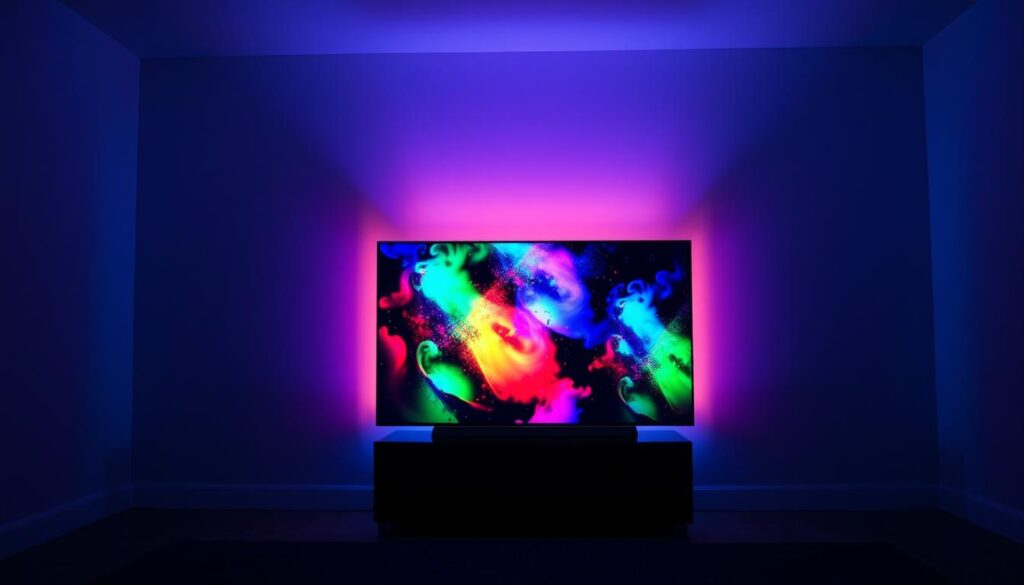
The Philips OLED 810 combines a high-quality OLED panel with the unique three-sided Ambilight system, which extends the picture beyond the screen’s borders. The result is a particularly immersive viewing experience that impresses equally with movies and games.
Advantages
- Three-Sided Ambilight for Immersive Viewing Experience
- Excellent OLED Picture Quality
- Support for All Major HDR Formats
- Good Gaming Features with HDMI 2.1
- Excellent Value for Money
Disadvantages
- No USB Recording Function
- Only two HDMI 2.1 Inputs
- Google TV sometimes a bit sluggish
| Specification | Details |
| Display Technology | OLED |
| Available Sizes | 48″, 55″, 65″, 77″ |
| Resolution | 4K UHD (3840 x 2160) |
| Refresh Rate | 120 Hz |
| HDR Formats | Dolby Vision, HDR10+, HDR10, HLG |
| Processor | P5 AI Perfect Picture Engine |
| Operating System | Google TV |
| HDMI 2.1 Ports | 2x (out of 4 total) |
Hisense U7NQ – The Best Value TV
The Hisense U7NQ offers Mini-LED technology at a remarkably affordable price. With high brightness, good contrast, and extensive gaming features, it is an excellent alternative to significantly more expensive premium models.
Advantages
- Excellent Value
- High brightness and good contrast
- Gaming at up to 144 Hz
- Support for all major HDR formats
- Integrated subwoofer for better sound
Disadvantages
- Limited viewing angle
- White balance could be more precise
- Operating system not as refined as premium brands
| Specification | Details |
| Display Technology | Mini-LED |
| Available Sizes | 55″, 65″, 75″, 85″ |
| Resolution | 4K UHD (3840 x 2160) |
| Refresh Rate | 144 Hz |
| HDR Formats | Dolby Vision IQ, HDR10+, HDR10, HLG |
| Processor | Hi-View AI Engine |
| Operating System | VIDAA U |
| HDMI 2.1 Ports | 2x (out of 4 total) |
Comparison Table of the Best TVs
To make your decision easier, we have summarized the most important features of the presented TV models in a clear table:
| Model | Technology | Sizes | HDR | Gaming | Special Features | |
| LG OLED G5 | OLED evo | 55″-83″ | Dolby Vision, HDR10, HLG | 4K@120Hz, VRR, ALLM | Gallery Design, webOS 24 | |
| Samsung S95F | QD-OLED | 55″-83″ | HDR10+, HLG | 4K@120Hz, VRR, ALLM | Matte Display, One Connect Box | |
| Sony Bravia 9 | Mini-LED | 65″-85″ | Dolby Vision, HDR10, HLG | 4K@120Hz, VRR, ALLM | Acoustic Multi-Audio, Google TV | |
| Philips OLED 810 | OLED | 48″-77″ | Dolby Vision, HDR10+, HDR10, HLG | 4K@120Hz, VRR, ALLM | Three-sided Ambilight, Google TV | |
| Hisense U7NQ | Mini-LED | 55″-85″ | Dolby Vision IQ, HDR10+, HDR10, HLG | 4K@144Hz, VRR, ALLM | Integrated Subwoofer, VIDAA U |
Buying Guide: The Right TV for Your Needs
Depending on your usage scenario and personal preferences, a different TV might be the best choice. Here are our recommendations for various use cases:
For Movie Lovers
If you mainly watch movies and series, you should pay attention to the following features:
- OLED technology for perfect black and contrast
- Dolby Vision for optimized HDR display
- Good motion handling (24p without judder)
- Filmmaker Mode for faithful reproduction
- Good sound system or connectivity options for external audio systems
Our recommendation: LG OLED G5 or Sony Bravia 9
For Gamers
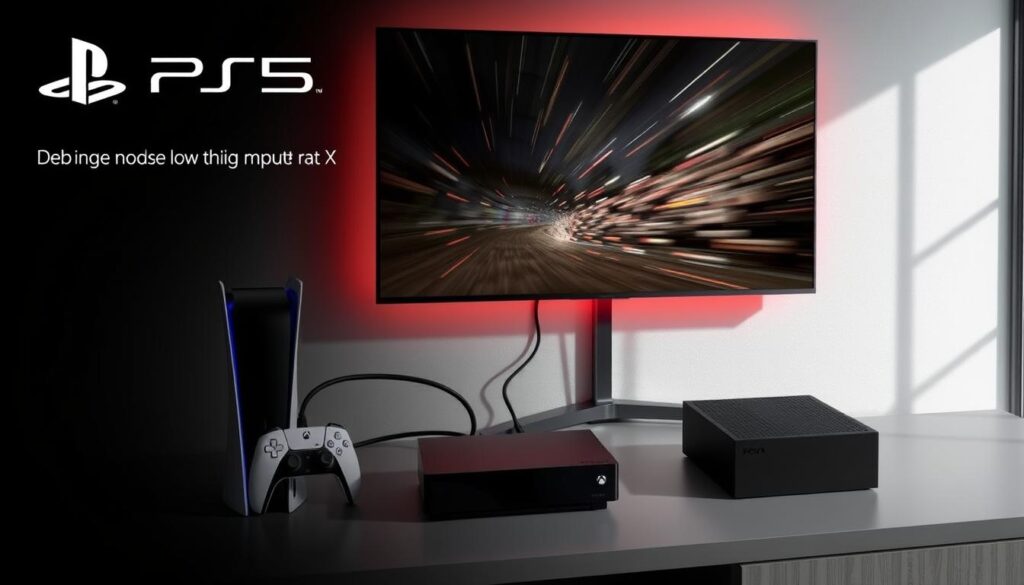
For an optimal gaming experience, especially with PS5 or Xbox Series X, these features are important:
- HDMI 2.1 with 4K@120Hz support
- VRR (Variable Refresh Rate) for smooth gameplay
- ALLM (Auto Low Latency Mode) for automatic game mode
- Low Input Lag under 10ms for responsive gaming
- HGiG for precise HDR gaming
Our recommendation: Samsung S95F or LG OLED G5
For Sports Fans
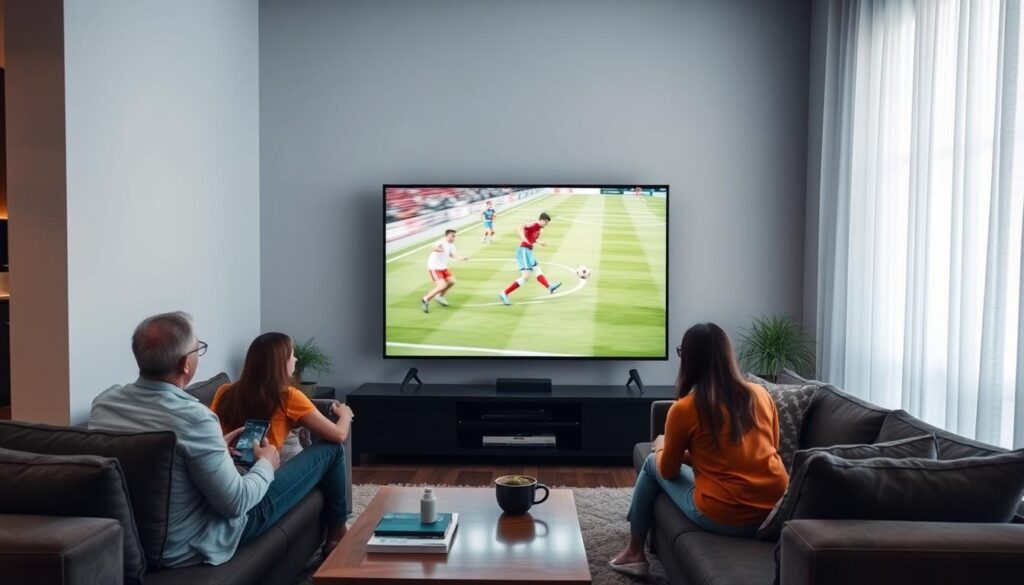
For sports broadcasts, fast movements and good visibility even in daylight are crucial:
- High refresh rate (120Hz) for smooth movements
- Good motion clarity without blur during fast actions
- High brightness for viewing in daylight
- Wide viewing angle for group viewing
- Good anti-reflection against reflections
Our recommendation: Samsung S95F or Sony Bravia 9
For Bright Rooms
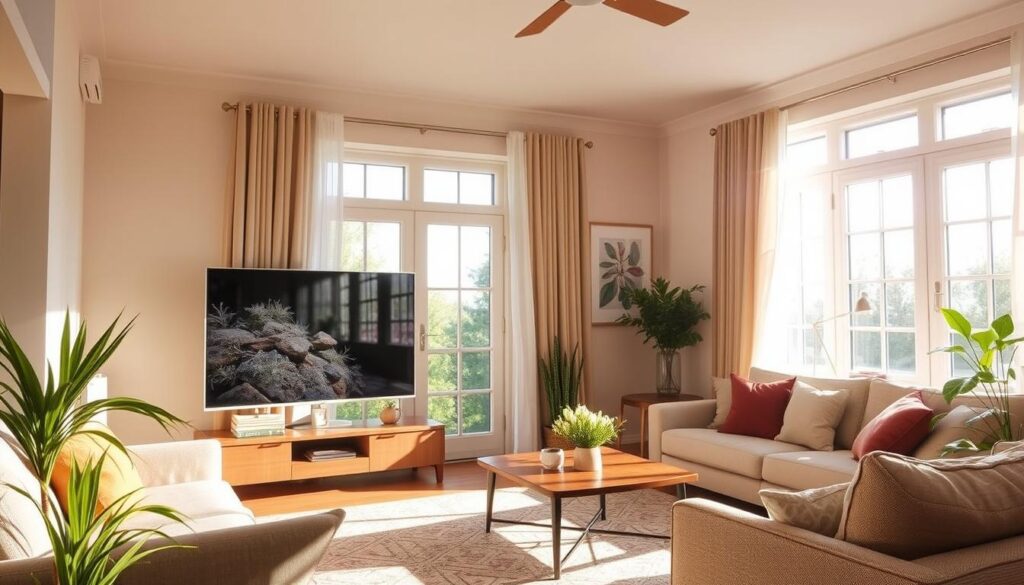
In bright rooms with a lot of daylight or direct sunlight, these features are important:
- High peak brightness (>1000 Nits)
- Effective anti-reflection against reflections
- QLED or Mini-LED technology
- Matte Display for reduced reflections
- Good color saturation even at high brightness
Our recommendation: Samsung S95F or Sony Bravia 9
For Small Rooms
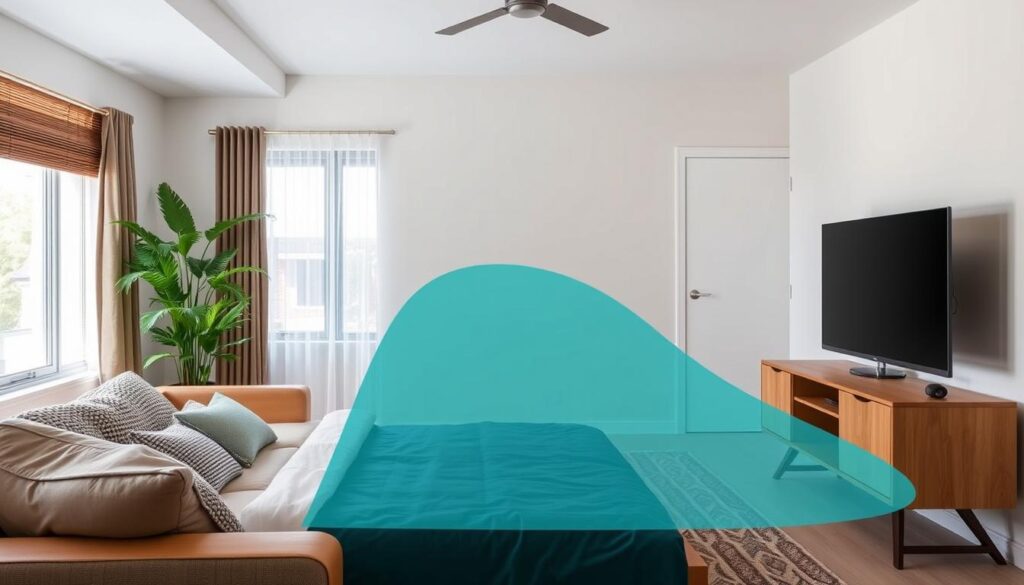
In smaller rooms with limited space and shorter viewing distances, you should consider:
- Appropriate screen size (42-55 inches)
- Optimal viewing distance (approx. 1.5-2.5m for 55 inches)
- Compact design with narrow bezels
- Good sound quality without external speakers
- Wall-mounting option for space saving
Our recommendation: LG OLED C5 42″ or Philips OLED 810 48″
For Budget-Conscious Buyers
If you are looking for good value for money without sacrificing important features:
- Mini-LED or QLED instead of OLED for better value for money
- Mid-range models from premium manufacturers
- Previous year’s models with price reduction
- Focus on important features instead of niche functions
- Good basic equipment with 4K, HDR and Smart TV
Our recommendation: Hisense U7NQ or TCL C7K
Future Trends in TV Technology
TV technology is constantly evolving. Here are some trends that will shape the future of television:
8K Resolution
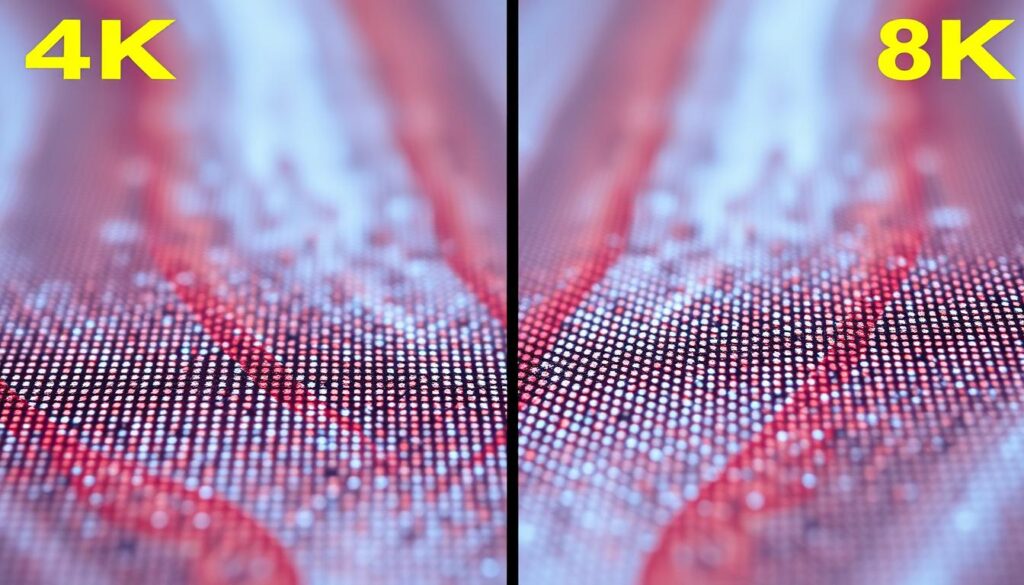
8K TVs offer 7680 x 4320 pixels, four times as many pixels as 4K models. Although native 8K content is still rare, advanced upscaling algorithms also improve the display of 4K material. With falling prices and increasing content availability, 8K will gain importance in the coming years.
Micro-LED Technology
Micro-LED combines the advantages of OLED (perfect black, infinite contrast) with those of LED (high brightness, long lifespan). Each pixel consists of tiny, self-illuminating LEDs. Currently, Micro-LED TVs are still extremely expensive, but with advancing production technology, they will become more affordable in the future.
AI Image Optimization
Artificial intelligence plays an increasingly important role in image optimization. Modern processors analyze image content in real-time and automatically adjust parameters such as contrast, sharpness, and colors. Future generations will work even more precisely and even be able to reduce image noise or improve resolution.
Improved Gaming Features
With the increasing prevalence of gaming on consoles and PCs, TV manufacturers will further expand their gaming features. Future models will offer higher refresh rates (up to 240Hz), even lower input lags, and extended VRR ranges to further improve the gaming experience.
Flexible and Transparent Displays
Rollable and transparent displays will change the way we integrate TVs into our living spaces. These innovative designs allow the TV to become invisible when not in use or transform into a work of art, which is particularly attractive in design-oriented households.
Improved Audio Technologies
Future TVs will integrate more advanced audio technologies that produce sound directly from the screen. Through precise control of sound waves, these systems can create a room-filling, three-dimensional sound that reduces the need for external speakers.
Conclusion: The Best TVs for Every Need
The choice of the perfect TV depends heavily on your individual needs, your budget, and the conditions of your living space. Our comprehensive analysis of the best TVs 2025 shows that a suitable model is available for every need.
For the best picture quality and a premium experience, we recommend the LG OLED G5 or the Samsung S95F with QD-OLED technology. If you are looking for a TV for bright rooms, the Sony Bravia 9 with its high brightness is the best choice. For a particularly immersive experience, the Philips OLED 810 with Ambilight offers a unique feature. And if you are looking for excellent value for money, the Hisense U7NQ is our clear recommendation.
Regardless of your decision, it is important to pay attention to the features relevant to you and adapt the TV to your specific needs. With the right settings and the appropriate size, your new TV will bring joy for many years.
Find Your Perfect TV
Ready for a new TV experience? Discover our top recommendations and find the perfect TV for your needs.
Best Picture Quality: LG OLED G5
For Bright Rooms: Samsung S95F
Best Value for Money: Hisense U7NQ
Frequently Asked Questions about TVs
What TV size is optimal for my living room?
The optimal TV size depends on the viewing distance. As a rule of thumb: screen diagonal in inches = viewing distance in meters × 25. So, for a viewing distance of 2.5 meters, a 65-inch TV (2.5 × 25 = 62.5) would be optimal. For 4K TVs, the viewing distance can also be slightly shorter without pixel structures becoming visible.
Is the premium for OLED over LED/LCD worth it?
OLED offers the best picture with perfect black and infinite contrast, which is particularly impressive in dark rooms and for movies. The premium is worth it for movie lovers and quality enthusiasts. However, for bright rooms or with a limited budget, high-quality LED/LCD TVs with Mini-LED technology can also be an excellent alternative.
How important is HDMI 2.1 for my new TV?
HDMI 2.1 is particularly important for gamers with current consoles (PS5, Xbox Series X) or gaming PCs, as it enables 4K@120Hz, VRR, and ALLM. For normal TV and movie use, HDMI 2.0 is sufficient, as most content is transmitted at a maximum of 60Hz in 4K. However, if you want to invest in the future, HDMI 2.1 is recommended.
Is there really a burn-in risk with OLED TVs?
Modern OLED TVs have implemented various protection mechanisms against burn-in. With normal use and varying content, the risk is very low. It can become problematic if static elements such as channel logos or score displays are shown for very long periods (several hours daily over weeks). For most users, burn-in risk is no longer a practical problem today.
Is an 8K TV worth it yet?
For most users, an 8K TV is not yet worth it. Native 8K content is very rare, and the price premium is considerable. In addition, the visible difference to 4K at normal viewing distances and screen sizes under 75 inches is minimal. It is better to invest in a high-quality 4K TV with better picture quality and switch to 8K in a few years when more content is available and prices have dropped.